Skip to main content
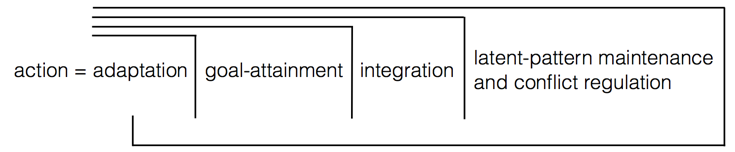
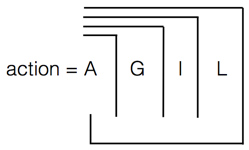
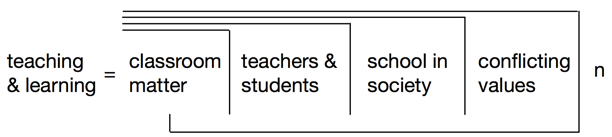
table of contents
Mindful Design in the Humanities
1Continuity concerns what is potential
whereas actuality is incurably atomic.
2(Alfred North Whitehead)
3
- In 1959 Charles Percy Snow talked about the two cultures of the sciences searching for a knowledge as yet unknown, on one hand, and the humanities insisting on a past not to be forgotten, on the other (Snow 1964). Unfortunately, this divide superseded another laid bare by Herbert A. Simon in a collection of essays in 1969, who talked instead about natural sciences being interested in a knowledge to be shared objectively, on one hand, and the sciences of the artificial actively involving the observer researching in their subjects, on the other (Simon 1981). When John Brockman came up with his idea of a “third culture” (Brockman 1995), he perfectly emphasised the evolutionary character of any knowledge of complex phenomena to be created and to be tested at the same time, yet unfortunately did not—and still does not—refer to the idea of sciences of the artificial adequately capturing that evolutionary character. Even social science studies, while insisting on the performative and constructive character of natural science knowledge (Latour 1999: Knorr Cetina 1981 and 1999), do not dare look into that knowledge as a product of design. And “radical constructivism” (Glasersfeld 1995) is more about the distinction between the “invention” of knowledge and its felicitous ‘fit’ than about the interaction which makes that fit happen in the first place.
- Herbert A. Simon proposed looking more closely at the sciences of the artificial because they inform highly professional activities like those of architects, designers, therapists, physicians, lawyers, and consultants. They all create artefacts they work with while creating them and begin to understand because of their research on them while working with them. Their flagrant violation of the ‘scientific’ principle of the observer not being permitted active involvement in the production of knowledge for them is of no interest because they pursue goals that, if attained, are their proof of the matter. Simon posits that there is no justification for deeming these professional activities unscientific or unluckily disengaging from attempts to look more closely at methodologies and epistemologies of human activity. Yet there is experiment, evaluation, generalisation, specification, method, and theory in these practices, which are merely overlooked by an academic research that has its prejudices and vested interests about what should count as science and what not.
- I would like to propose adding teaching, humanities, and the arts to the sciences of the artificial considered by Simon. And I would like to first test this proposal by looking at Simon’s paradigmatic and perhaps most unlikely cases of the sciences of the artificial, namely psychology and economics, and to then look a little more closely at what it means to consider “mind”, the Geist of Geisteswissenschaften, and the “humans” the humanities both analyse and synthesise, as perfect instances of the artefacts these sciences of the artificial create and test.
- Psychology and economics, to Simon, are sciences of the artificial in the sense that (a) they talk about human beings who bring forth their life by artificially bringing in goals in psychology, and scarcity in economics, in order to observe and evaluate the actual in terms of the potential, or the present in terms of some future; and (b) they come up with models that are necessarily artificial as well when trying to match the way human activity organises itself. Simon emphasizes that both psychology and economics are as malleable as human behaviour in that they assume nothing more than the adoption of goals, the respect for limits, and some boundaries of attention and memory, to describe a wealth of actual and possible human behaviour. The assumption of goals to be adopted, any goals and constraints to be observed, any variable constraints, constitute the only proposition necessary to produce, understand, and model human behaviour, which is thus conceived of as a “thin interface” (Simon 1981: 131 et seq.) between the black boxes of inner and outer environments, the natural and technical environments, and the organic, neuronal, mental, and perhaps social environments.
- Simon opts for the concept of interface because an interface may be designed as relatively simple when compared to the complexity it is dealing with: “We would look toward a science of the artificial that would depend on the relative simplicity of the interface as its primary source of abstraction and generality” (ibid..: 12). Moreover, it fits the observation that any professional activity, including scientific activity, works by what Simon calls an “empty-world hypothesis” (ibid..: 221; cf. Bolz 2005), first noticed among administration officers who focus on their files while benignly neglecting anything else (Simon 1997: 119). Within the sciences of the artificial, when theoretically, methodologically, and epistemologically integrated and reflected, the empty-world hypothesis goes a long way toward a mindful awareness and reflection of complexity to be reduced but not negated and forgotten. The empty world is still a world. It may come up with new and surprising events, ideas, and considerations at very short notice. Interfaces shift between situations, perspectives, and contexts.
- Teaching comes up with artefacts, designed to apply in class. Learning consists in re-creating these artefacts, reconfiguring them depending on the situation, the people present, previous and next lessons, and the expectations, feelings, and intelligence at hand. The humanities in universities, and the arts in the wild, help provide schools with these artefacts and deliver model interpretations as well as forestalment, ambivalence, and new stimulus. These artefacts are “boundary objects” (Star 1989 and 2010) which in class help create small worlds, experienced and displayed to each other by teacher and students. The artefacts are the interfaces at which the black boxes of inner and outer environments for moments interact without anybody being in a position to understand exhaustively what happens at the interface and on either side. Teaching and learning differ. This is not only true for the humanities and the arts but for the natural sciences, including mathematics (Wittmann 1995), and the social and cultural sciences as well.
- The humanities should not be surprised to be counted among the sciences of the artificial. Their most cherished subject, Geist or mind, is an artefact par excellence, and has been so at least since Hegel (1991 and 2003). There are stages to its development, leading from the sleeping mind, in which we nevertheless do not find rest, to mind in relation to a world, becoming a consciousness which tends to, and sometimes changes, its mere opinions, and from there to mind as mind and reason in and of itself which eventually turns absolute. This artefact cannot, of course, be considered an individual product of an individual human being but is to be located both within and without any individual, defining first its stand within the world, and then the world’s position within the individual consciousness, leading the individual from adversity to bliss. The artefact becomes even more explicit when seen in the context of morality or Sittlichkeit, which once again leads the individual to an acknowledgement of first self-interest, then marriage, then bourgeois society, law and police, to insights into the necessary roles of the state, the prince, and world history.
- The role of the mind as artefact is to come up with “speculative propositions” (Hegel 2003: preface; Simon 1970). A speculative proposition is a dialectical proposition that is not satisfied with stating the identity of the object to itself but searches for the idea (Begriff) of the object within a reality that is not exhausted in the present but points beyond it. Without this dialectical distinction between actual and potential there would be no creative act, let alone artificial object. Ideas may be considered unities of distinction of the actual from the potential.
- Such an understanding of the dialectical as linking the potential with the actual, relying, of course, on their distinction in the first place, leads back to Plato’s ideas in the context of his canvass for a “hypothetical method” (2009: 99e–101a; Gadamer 1978) as well as to Giambattista Vicoʼs suggestion of historical and cultural methods, in distinction from natural sciences, as kinds of “poetic wisdom” (1984: book II of part IV) looking at the human world as the product of human activity, not necessarily facilitating understanding, while leaving nature, as created by God, to His insight alone. The dialectical is creatively and poetically hypothetical in looking at the idea, or form, of an object in terms of an observer inventing a triadic relation between the actual, the potential, and the observers themselves. Studying the history of universities in general, and of the humanities in particular (Freedman 2017), it would be interesting to search for moments when ideas of poetic wisdom and artificial design interfere with the rationality of objectified knowledge. Sometimes it is one and the same person who is drawn to the humanities because of their poetic designs, yet manages in class to teach only his, or her, rational knowledge (Williams 1965).
- The paradigm of the sciences of the artificial has been with us since human beings invented first magical, then historical thinking. Both are as operational as they are relational. Both refuse the positively identical. Both operate a kind of general negativity which is not antinomic but reflective. Both are inherently critical (Lehmann 2017) and deconstructive (Wolfe 2017) because they judge—and feel (Whitehead 1979: 187)—the actual with respect to the potential and never trust the distinctions they are nevertheless obliged to draw to tell the potential from the actual, and vice versa. Negativity prevails and pervades a space and time to be searched anew for possible propositions at any given moment.
- “Objectivity” as the mantra of natural science is the product, first, of a world created by God only to be contemplated by human beings, and, second, of a peer attempt to control what science and scholarly knowledge are about. In monasteries, the two motives worked hand in hand. Yet, they not only kept magical thinking at a distance but also blocked any acknowledgment of technical procedures to produce certain kinds of knowledge. Texts were written only to praise the glory of a wonderful, and to invoke the terror of a frightening, world. They brought insights which nature granted to us. They never produced anything new. For centuries, human curiosity was occupied with obtaining permission to be legitimate in the first place (Blumenberg 1985), still a world away from becoming operational and creative. Any operational and creative thinking and doing was relegated to téchne, that is to arts and crafts, eventually developing into a technological worldview which still presumed that any newly created technology was proof of nature’s hidden potential, not of human ingenuity. Human ingenuity was, so to speak, commissioned by or in the service of, the nature of things. Errors were thus possible but not wrongdoing, which, of course, helped produce legitimacy.
- It was Kant who discovered the threefold unconditional of human reason in stating, first, the subjectivity of any thinking, second, the hypothetical of any bringing together of a series of issues, and, third, the systematic within a disjunctive thinking distinguishing between different purposes and between purpose and means (2003: B378 et seq.). His idea of the subject was ambivalent to its core, since the freedom granted to subjects whose sensuality was theirs alone also made it evident that common sense and morality should intervene to secure this freedom within a ‘reasonable’ use of it. The critiques of pure reason, practical reason, and judgement develop an understanding of cognition while endowing this understanding with the means to morally and politically control cognition. Kant’s criticism works towards the liberation of the subject and the containment of that subject.
- Even if only latently and ambivalently, the human mind and human reason are artificial objects of a science of the artificial avant la lettre. Apparently, latency and ambivalence support each other such that the real creativity of scholars, teachers, and students displayed at any moment in class as well as in texts remains attributed to individual talent if not character and temper, and never attains epistemological and methodological dignity. Even the rise and success of didactics in primary, secondary, and tertiary education do not change the situation but only underline that research is one thing, teaching and learning another. Further attempts to develop an anthropology of mind (Feuerbach 1986), a Geisteswissenschaft with respect to both history and society (Dilthey 1988), or a philosophy of symbolic forms (Cassirer 1965) do not change the general understanding of having to do with attempts to describe objectively matters of hermeneutic fact, which then have to be brought to school and university to be appropriately taught and examined.
- More recently, ‘mindfulness’ has been discovered in organisation studies to describe states of body and mind in the staff of so-called high-reliability organisations (such as nuclear power plants, aircraft carriers, intensive care units, fire and rescue services, mines, and others) which focus on instant error-avoidance and correction (cf. Weick/Sutcliffe 2001). Communication is important, but perception is even more important. It depends on the design of the organisation, on its modes of cooperation and division of labour, and on the training more than the education the staff enjoys, on how quickly, smoothly, and self-evidently—by anticipatory action more than by shout—all people involved keep the business running. Mindfulness here is about the anticipation of things that need to be done that do not have to be found in manuals or job descriptions. Design in mindful organisations is double. It is first of all about the training and re-training for possible situations. But then it is also about anybody on the staff having to ensure that the design for a given situation is running smoothly. This means that mindful organisations are co-designed by members of the organisation originally designed by its planners. They may be understood as naturally artificial organisations, depending on discretionary action and decision as a matter of fact in the nature of things.
- I suggest taking Simon’s idea of sciences of the artificial seriously in the humanities and the arts, too, and talking about scholars, teachers, and students as designers of mindful objects in texts, classes, and courses. Leaving aside the arts, I focus on the humanities. But in the arts, too, it makes sense to look at the format of exhibitions, concerts, performances, and happenings as artificial situations bringing forth artificial objects to be experienced, and acted upon, by performers and audience. In the humanities, the task is more urgent since they stick to the fantasy of objectively operating natural sciences even when distinguishing themselves from them with respect to their hermeneutic and deconstructive obligations. I propose to switch from philosophy to sociology in searching for a better understanding of mind as artificial object even when firmly grounded in everyday behaviour. The nature of mind is artificial, even when we still do not account for attempts to create artificial intelligence in terms of machines and algorithms.
- In switching from philosophy to sociology I propose taking a close look at Talcott Parsons’s “paradigm of the human condition” (1978). Here we have a mature concept of almost cognitive science quality in looking at action in terms of (i) a physical and chemical material basis for living systems, (ii) the human organic system, (iii) the symbolic organisation of action, and (iv) an ultimate grounding of meaning for action in a so-called telic system as provided for by theology and philosophy. Parsons’ idea is to analyse any action in terms of these four aspects defining functions to be fulfilled. Action is considered a function of these four aspects, as they are functions of any action. Parsons’ understanding of his theory of action as a system was “voluntaristic” (1968), not yet one of artificiality, but as soon as the recursivity and hence reflexivity of action, on one hand, and the four functions, on the other, are acknowledged, nothing prevents us from using his theory within the context of a science of the artificial. Parsons’ theory was still teleological since he considered the telic system as analytically distinguished from the symbolically organised action system proper. Parsons’ action fulfils functions external to them, be they the survival and progress of humanity or strings attached to any action by divine design. Niklas Luhmann internalised Parsons’ telic system and the “culture” emanating from it into the social system proper (1995: 104 et seq.), such that today we can reinterpret teleology as teleonomy (Mayr 1974; cf. also Parsons 1979: 704) and attribute it not to a telic system but to the human organic system as understood by more recent neurosciences in their concept of “predictive coding” (Frith 2007).
- What philosophers call “mind”, sociologists call the “communication” of action. This communication is as synthetic as it is artificial. It accounts for limitations within bodies, brains, consciousness, social interaction, and the environment. Yet, it also describes a wide range of malleability within those limitations and when surpassing and shifting those limits. Parsons’ idea is to call for action in situations when (i) “pattern variables” force us into contradictory expectations (Parsons/Shils 1951), when (ii) we are subject to a “cybernetic hierarchy” channelling energy from the physical and chemical surroundings and the human organic system to action and culture, and conversely channelling information from culture and action to the human organic system and the material basis for living systems (Parsons 1961), and when (iii) all four functions of the paradigm are less than evidently accommodated to each other. This means that Parsons’ idea is to call for action in just about any situation where human beings or other sufficiently complex units are involved. Parsons’ theory is a highly dynamic one. How in the 1970s he could be accused of having a conservative interest in stability is a puzzle in its own right. I propose to call “communication” not only the symbolic organisation of actions among each other, both differentiating and integrating them, but also the exchange processes going on between matter, organism, action, and culture—culture consisting of values and norms acting as interdependency breaks in social situations. Luhmann’s synthesis of communication out of information, utterance, and understanding, all three pointing selectively to the complexity of bodies, minds, situations, motives, and interests involved (1995: 139–145) may well be read within such a reorientation to Parsons’ paradigm.
- Thus, there are four functions to be fulfilled by any one action, and served and called upon by any action, namely (i) adaptation to the material and, I should add, technical material basis for living systems, (ii) goal-attainment, the teleonomic aspect, by organisms (including brains) and personalities involved, (iii) integration of any action with, and differentiation from, any other action near and far in space and time, and (iv) a latent-pattern maintenance in the case of conflicts to be resolved with respect to norms and values then to be called for. These four functions give us A for adaptation, G for goal-attainment, I for integration, and L for latent-pattern maintenance and conflict regulation, thus matching the so-called AGIL-scheme of the paradigm of the human condition.
- I propose to look at the humanities in terms of artificial objects to be created in texts, classes, and courses with respect to these—and only these—four functions. Of course, there is a certain artificiality in this view of artificial objects and the humanities as a science of the artificial. Yet this means only that the theory applies to itself, as well. The scheme is scalable. It applies to any proposition as well as to texts, classes, curricula, schools and whole education systems. If on any one of these levels the design of artificial objects to be experienced by scholars, teachers, and students fails, the whole action of the humanities fails. The same, of course, applies to natural sciences as taught and learned in school and university. Having distinguished between natural sciences and the sciences of the artificial one soon realises that the natural sciences are artificial as well, and that there is a lot of natural experience in the sciences of the artificial. Any action within those four functions being only a “thin interface” (Simon again), there is ample space for the experience of spontaneity and complexity of any situation at hand. The distinction between the natural sciences and the sciences of the artificial experiences a fate similar to the distinction between constative and performative proposition as proposed by John L. Austin (1962). As soon as the distinction is articulated, it becomes evident that one side of it informs the other, such that the distinction becomes “deconstructed” (e. g. Derrida 1990) and in its weakened state becomes operationally useful. We know that distinctions that cannot be deconstructed become culturally violent (Galtung 1990).
- I propose to look at the humanities in terms of a calculus of action coming up with artificial objects useful for organising experience in texts and classes. Using George Spencer-Brown’s notation of distinctions within his calculus of indications (2008) we can write the AGIL-scheme differently from the cross-tabulated form used by Parsons (cf. Luhmann 1982: 67 et seq.).
- Starting from
AGIL-scheme
4
- or, shorter,
AGIL-scheme
5
- we get
AGIL-scheme
6
- and can use this form to inquire into, and design, any given situation in reading, writing, and class. The artificial objects of the humanities have, simultaneously and interdependently, (i) to adapt to whatever the physical, technological, architectural, and otherwise material situation in the classroom is, (ii) to pay tribute to the actual and potential purpose to be embodied and developed by both teachers and students, (iii) to integrate what action is taken in class with any other action taken in class, action taken in school, and action taken in society, and (iv) to come up with values and norms, usually conflicting, to ground, defend, and foster the action selected. The unmarked state, n, usually goes unnoticed, yet may be populated by expectations for life and career, by faiths in various gods and devils, by esteem or contempt for Bildung, or by anticipation of the next break and the playground.
- The same form of teaching and learning may be used to analyse given class and school situations with respect to the functional interdependence of those five variables (Parsons 1964; Dreeben 1968; Luhmann 2002) or, alternatively, to synthesise, i. e. design and engineer, a class according to ideas to be applied and tested. Analysis looks for values of n being implicitly presupposed. Synthesis experiments with various explicit values for n and studies its support by, and bearing on, the values of the other four variables of the form. Spencer-Brown’s notation allows us to consider any distinction as the mutual implication and negation of the two sides of the distinction, just like a NOR-gate in logic and electronics. The concatenation of several of these distinctions gives a both simple and complex picture of the communication and control coming up with that form, a communication and control among first-order and second-order observers (Foerster 2003). The picture is simple because it works like a model of a social situation, consisting of not more than five variables, four of them defined by the AGIL-scheme, the fifth brought in by Spencer-Brown’s calculus of indications. And it is complex because to imagine the communication and control going on among the observers choosing their action, their expectations, and their experience of the situation depending on the values the variables assume within a constant flux of events and decisions is certainly beyond any linear and causal understanding.
- A mindful design of the humanities consists in coming up with ideas such as truthful thinking, responsible person, fair society, critical understanding, professional formation, scientific presentation of a problem, and others, or any combination of these, and checking out which values should be assumed by all variables depending on their interdependence. Account for interests already invested, blocking any change. Ask for groups of observers depending on values already found or on values to be developed. Design a process that can bring those groups together in order to compare the actual with the potential and perhaps to settle on certain designs to be realised. A mindful design of the humanities consists and will consist in (i) asking for the ‘mind’ already in play in actual constellations of texts, classes, and schools and (ii) looking for the variables of the form as the strategic setting to pay heed to when trying to design new situations for an agile ‘mind’ seeking out new constellations of classroom matter, goal-seeking by teachers and students, settings of schools in society, and values to be called upon.
- The humanities—and with them the arts—are another kind of science of the artificial or design science. There is no need to be pessimistic about the value and benefit we get from it. It is able to create forms; and it is able to create artificial objects reflecting these forms (cf. Fohrmann 2017). Its mindful design of artificial objects is indispensable for creating spaces and times; we need to look at how we create our world, how we create it by understanding.
7Acknowledgement: English copyediting by Rhodes Barrett
References
- Austin, John L. (1962): How to do things with words. The William James Lectures delivered at Harvard University in 1955. London: Oxford University Press.
- Blumenberg, Hans (1985): The legitimacy of the modern age. Transl. Robert M. Wallace. Cambridge (MA): MIT Press.
- Bolz, Norbert (2016): Bausteine zu einer Designwissenschaft. Über Herbert A. Simons „The sciences of the artificial“. In: Dirk Baecker (ed.): Schlüsselwerke der Systemtheorie. 2nd ed. Wiesbaden: Springer VS, pp. 313–325.
- Brockman, John (1995): The third culture: Beyond the scientific revolution. New York: Simon & Schuster.
- Cassirer, Ernst (1965): The philosophy of symbolic Forms. 3 vols. Transl. by Ralph Manheim. New Haven (CN): Yale University Press.
- Derrida, Jacques (1990): Glas. Transl. John P. Leavey and Richard Rand. Lincoln: Nebraska University Press.
- Dilthey, Wilhelm (1988): Introduction to the human sciences: An attempt to lay a foundation for the study of society and history. Transl. by Ramon J. Betanzos. Detroit (MI): Wayne State University Press.
- Dreeben, Robert (1968): On what is learned in school. Reading (MA): Addison-Wesley.
- Feuerbach, Ludwig (1986): Principles of a philosophy of future. Transl. by Manfred Vogel. Cambridge (MA): Hackett.
- Foerster, Heinz von (2003): Understanding understanding: Essays on cybernetics and cognition. New York: Springer.
- Fohrmann, Jürgen (2017): Das Gespinst der Geisteswissenschaften. Keynote at the International Conference on The Ends of the Humanities, University of Luxembourg, September 10–13.
- Freedman, Joseph S. (2017): The origin of the humanities (studia humanitatis) and its relevance for the undergraduate teaching of the humanities in our time. Talk at International Conference on The Ends of the Humanities, University of Luxembourg, September 10–13.
- Frith, Chris (2007): Making up the mind: How the brain creates our mental worlds. London: Blackwell.
- Gadamer, Hans Georg (1978): Einleitung. In: Plato. Texte zur Ideenlehre. Ed. and transl. idem. Frankfurt am Main: Klostermann, pp. 7–10.
- Galtung, Johan (1990): Cultural violence. In: Journal of Peace Research 27, pp. 291–305.
- Glasersfeld, Ernst von (1995): Radical constructivism: A way of knowing and learning. London: Falmer.
- Hegel, Georg Wilhelm Friedrich (1991): Elements of the philosophy of right. Transl. by H. B. Nisbet. Cambridge: Cambridge University Press.
- Hegel, Georg Wilhelm Friedrich (2003): The phenomenology of mind. Transl., with an introduction and notes, by J. B. Baillie. 2nd rev. ed. Mineola (NY): Dover.
- Kant, Immanuel (2003): Critique of pure reason. Transl. by J. M. D. Meiklejohn. New York: Dover.
- Knorr Cetina, Karin (1981): The manufacture of knowledge: An essay on the constructivist and contextual nature of science. Oxford: Pergamon Press
- Knorr Cetina, Karin (1999): Epistemic cultures: How the sciences make knowledge. Cambridge (MA): Harvard University Press.
- Latour, Bruno (1995): Pandoraʼs hope: Essays on the reality of social science studies. Cambridge (MA): Harvard University Press.
- Lehmann, Maren (2017): Dead Sociologistsʼ Society. Soziologie nach dem Verlust der Lust an der Gesellschaft. Talk at the International Conference on The Ends of the Humanities, University of Luxembourg, September 10–13.
- Luhmann, Niklas (1982): Talcott Parsons: The future of a theory. In: Idem: The differentiation of society. Transl. by Stephen Holmes and Charles Larmore. New York: Columbia University Press, pp. 47–68.
- Luhmann, Niklas (1995): Social Systems. Transl. by John Bednarz, Jr. Stanford (CA): Stanford University Press.
- Luhmann, Niklas (2002): Das Erziehungssystem der Gesellschaft. Ed. by Dieter Lenzen. Frankfurt am Main: Suhrkamp.
- Mayr, Ernst (1974): Teleological and teleonomic: A new analysis. In: Robert S. Cohen/Marx W. Wartofsky (ed.): Methodological and historical essays in the natural and social sciences. Dordrecht: Reidel (Boston Studies in the Philosophy of Science XIV), pp. 91–117.
- Parsons, Talcott (1961): An outline of the social system. In: Idem/Edward A. Shils/Kaspar D. Naegle/Jesse R. Pitts (ed.): Theories of society: Foundations of modern sociological theory. New York: Simon & Schuster, pp. 30–79.
- Parsons, Talcott (1964): The school class as a social system: Some of its functions in American society. In: Idem: Social structure and personality. New York: Free Press, pp. 129–154.
- Parsons, Talcott (1968): The structure of social action: A study in social theory with special reference to a group of recent European writers. New York: Free Press (Reprint).
- Parsons, Talcott (1978): A paradigm of the human condition. In: Idem: Action theory and the human condition. New York: Free Press, pp. 352–433.
- Parsons, Talcott (1979): Concrete systems and ‘abstracted’ systems: Living systems by James Grier Miller, a Review. In: Contemporary Sociology 8, no. 5, pp. 696–705.
- Parsons, Talcott/Shils, Edward A. (1951): Categories of the orientation and organization of action. In: Idem (ed.): Toward a General Theory of Action. Cambridge (MA): Harvard University Press, pp. 53–109.
- Plato (2009): Phaedo. Transl. David Gallop. Oxford: Oxford University Press.
- Simon, Herbert A. (1981): The sciences of the artificial. 2nd ed. Cambridge (MA): MIT Press.
- Simon, Herbert A. (1997): Administrative behavior: A study of decision-making processes in administrative organization. 4th ed. New York: Free Press.
- Simon, Josef (1970): Die Kategorien im ‚gewöhnlichen‘ und im ‚spekulativen‘ Satz. In: Wiener Jahrbuch für Philosophie 3, pp. 9–37.
- Snow, C[harles] P[ercy] (1964): Two cultures: And a second look. Cambridge: Cambridge University Press.
- Spencer-Brown, George (2008): Laws of form. 5th ed. Leipzig: Bohmeier.
- Star, Sudan Leigh (1989): The structure of ill-structured solutions: Boundary objects and heterogenous distributed problem solving. In: Les Gasser/Michael N. Huhns (ed.): Distributed artificial intelligence. Vol. 2. London: Pitman, pp. 37–54.
- Star, Susan Leigh (2010): This is not a boundary object: Reflections on the origin of a concept. In: Science, Technology, & Human Values 35, pp. 601–617.
- Vico, Giambattista (1984): The new science. Eds. Thomas Goddard Bergin and Max Harold Fisch. Ithaca (NY): Cornell University Press.
- Weick, Karl E./Sutcliffe, Kathleen M. (2001): Managing the unexpected: Assuring high-performance in an age of complexity. San Francisco (CA): Jossey-Bass.
- Whitehead, Alfred North (1979): Process and reality: An essay in cosmology. Corr. ed. by David Ray Griffin and Donald W. Sherburne. New York: Free Press.
- Williams, John (1965): Stoner, a novel. New York: Viking Press.
- Wittmann, Erich Ch. (1995): Mathematics Education as a ‘Design Science’. In: Educational Studies in Mathematics 29, pp. 355–374.
- Wolfe, Cary (2017): Posthumanism and interdisciplinarity. Keynote at the International Conference on The Ends of the Humanities, Université de Luxembourg, September 10–13.